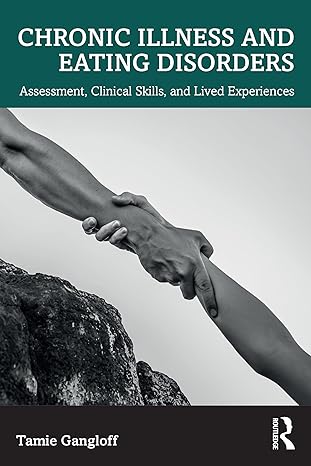
Chronic Illness and Eating Disorders: Assessment, Clinical Skills, and Lived Experiences
Earn 12 CE hours by reading Tamie Gangloff’s book on the overlooked intersection of chronic illness, disability, and eating disorders, then passing a short post-test.
- 12 continuing education hours
- Approved by NBCC ACEP No. 7905
- Book study · self-paced
- Written by Tamie Gangloff, MA, MFT · Routledge
How the book study works
- 1Get your copy of the book from Amazon (sold separately, not included in enrollment).
- 2Read the book at your own pace.
- 3Enroll here for the continuing education credit.
- 4Pass a short online post-test (80% or higher, unlimited retakes) and complete a brief evaluation.
- 5Your 12-hour CE certificate is emailed to you right away.
Enable JavaScript to enroll online. For enrollment help, email Info@theeatingdisorderconsultants.com.
$50 covers the CE post-test, evaluation, and certificate. The book is purchased separately.
About the Book
Chronic Illness and Eating Disorders: Assessment, Clinical Skills, and Lived Experiences explores the complex and often overlooked relationship between chronic medical conditions, disability, and eating disorders. While eating disorders are traditionally viewed through psychiatric and behavioral frameworks, this book broadens the conversation by examining how chronic illness, chronic pain, autoimmune disease, connective tissue disorders, sports injuries, medical trauma, and loss of physical function can profoundly influence appetite, body image, identity, and an individual’s relationship with food.
Combining current research, clinical expertise, and lived experience, the book provides an interdisciplinary framework for understanding the biopsychosocial factors that contribute to eating disorders and disordered eating in medically complex populations. It challenges clinicians to move beyond symptom-focused assessment by considering the impact of gastrointestinal disorders, food-related fear, disability, grief, body image disturbance, and diagnostic uncertainty on treatment engagement and recovery.
Designed for mental health professionals, dietitians, physicians, students, and individuals with lived experience, the book offers practical assessment strategies, clinical interventions, case examples, and reflective exercises that promote patient-centered, trauma-informed care. Readers are encouraged to recognize the distinction between adaptive responses to chronic illness and eating disorder psychopathology while developing greater confidence in interdisciplinary collaboration and differential assessment.
Learning Objectives
Upon completion of this book study, participants will be able to:
- Identify the biopsychosocial factors that contribute to the development and maintenance of eating disorders in individuals with chronic medical conditions, disabilities, and medical trauma.
- Differentiate eating disorder psychopathology from adaptive responses to chronic illness, including illness-related food avoidance, body image changes, and functional limitations.
- Apply evidence-informed, patient-centered assessment and treatment strategies that integrate psychological, medical, and nutritional considerations for individuals with co-occurring chronic illness and eating disorders.
- Analyze the impact of chronic illness, medical trauma, grief, and identity changes on body image, eating behaviors, and the therapeutic process.
- Implement ethical, interdisciplinary approaches to treatment planning that promote collaboration, reduce diagnostic bias, and support whole-person care.
About the Author

Tamie Gangloff, MA, MFT
tamiegangloff.comTamie Gangloff, M.A., MFT is a therapist, educator, and author whose work lives at the intersection of chronic illness, recovery, and resilience. She is a retired athlete, a chronic illness patient, and a scoliosis and spine fusion patient, whose personal journey deeply informs her professional work and is featured in her book, Chronic Illness and Eating Disorders: Assessment, Clinical Skills and Lived Experiences.
Tamie has worked across all levels of care for eating disorders and substance use, teaches Eating Disorder Psychology at West Chester University, and has presented nationally and internationally, including at SOSORT, on the psychological and emotional impact of scoliosis, medical trauma, and body image. She brings both clinical insight and lived experience to honest conversations about body trust, identity, grief, and resilience, especially when healing isn’t linear and there’s no clear finish line.
Keep learning
Explore our other eating-disorder CE trainings.
An Introduction to Eating Disorders Made Simple
A free 45-minute introduction to eating disorder treatment and our Integrated Compassionate Approach.
Eating Disorders Made Simple
The foundations of assessing, diagnosing, and treating eating disorders for mental health therapists.
Eating Disorder Mastery Class
For professionals ready to level up and dive deeper into the treatment of eating disorders.
The Brain and Body: Mental Health Impact of Malnutrition
A focused 1-hour training on how malnutrition disrupts mood, focus, and overall mental health — with practical tools to support clients.
One Client, One Team: Rethinking "Non-Compliance" with Compassion, Attunement, and Flexibility
A 1-hour training on what we call “non-compliance” and how to respond with compassion and attunement. We explore how our clients’ shame shows up and how our responses to it can contribute to "non-compliant" behaviors. We also explore how to spot an alliance rupture, and how to repair one, rooted in RO-DBT skills.
Eating Disorders & Chronic Illness: The Overlap Clinicians Can’t Ignore
A 2.25-hour on-demand training on the overlap between eating disorders and chronic illness (MCAS, EDS, Crohn’s, POTS), with guidance for assessing whether food avoidance is medically driven, ED-driven, or both.

The Eating Disorder Consultants has been approved by NBCC as an Approved Continuing Education Provider, ACEP No. 7905. Programs that do not qualify for NBCC credit are clearly identified. The Eating Disorder Consultants is solely responsible for all aspects of the programs.